
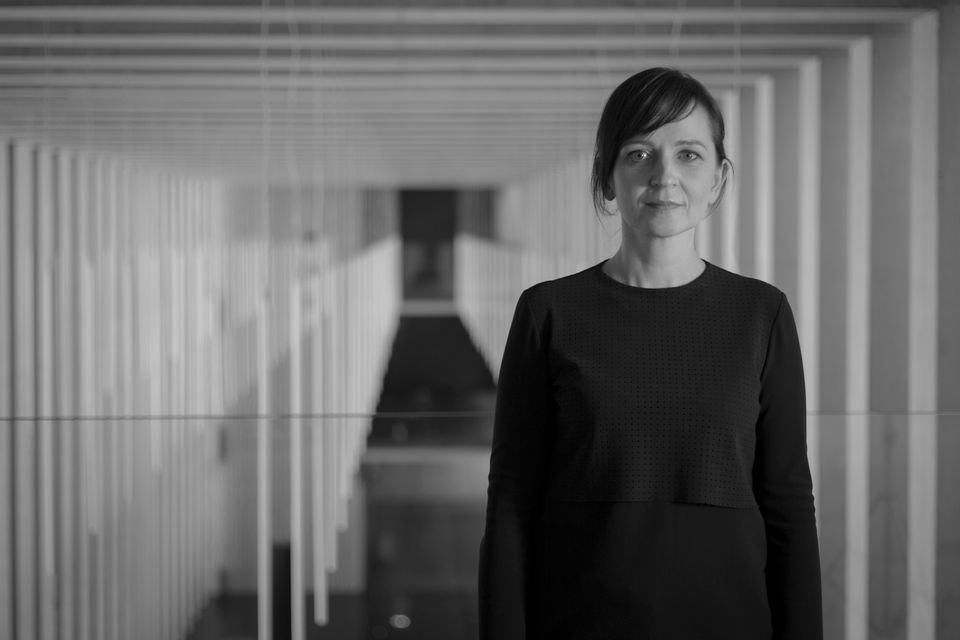
Goska Isphording performs MYTHE on harpsichord
until 13 March
For a captivating exploration of the harpsichord’s versatility, you couldn’t be in better hands than with Goska Isphording.
For a captivating exploration of the harpsichord’s versatility, you couldn’t be in better hands than with Goska Isphording. Thanks to her work, the instrument remains firmly relevant within 21st-century music. Nearly 200 compositions have been written for this leading harpsichordist, who specialises in contemporary and experimental repertoire. On Friday evening, 13 March, she performs her solo programme MYTHE at Pakhûs SOLO, featuring music by Louis Andriessen and two of his former students.
The concert opens with Overture to Orpheus. Composer Louis Andriessen (1939–2021) once said of this piece:
“The harpsichord has little to do with the piano, bu…
For a captivating exploration of the harpsichord’s versatility, you couldn’t be in better hands than with Goska Isphording. Thanks to her work, the instrument remains firmly relevant within 21st-century music. Nearly 200 compositions have been written for this leading harpsichordist, who specialises in contemporary and experimental repertoire. On Friday evening, 13 March, she performs her solo programme MYTHE at Pakhûs SOLO, featuring music by Louis Andriessen and two of his former students.
The concert opens with Overture to Orpheus. Composer Louis Andriessen (1939–2021) once said of this piece:
“The harpsichord has little to do with the piano, but everything to do with plucked instruments such as the harp, guitar and lute. I had Orpheus’ prelude in mind when writing this composition. References to dramatic developments can be found in the piece; it turns out to be an imaginary opera with Orpheus as its protagonist. As is common in my music of recent years, the borderline between canon and unison techniques forms the musical subject of the composition.”
Also on the programme is work by composer Janco Verduin, a true polymath whose inspiration ranges from software engineering and neuroscience to psychology, nature, biology and visual art. Verduin also conducts ecological field research — including bat studies — which influences his organically evolving musical structures. He approaches each composition as an extraterrestrial microcosm.
The title of his composition La tendre indifférence du monde is taken from L’Étranger by French philosopher Albert Camus, though it holds no specific meaning for the piece itself. Verduin explains:
“Writing for the harpsichord is challenging: pressing a key plucks a string, but dynamics cannot be shaped through touch. To create volume, you play more notes simultaneously or use additional strings via the manuals. I avoided melody and instead built vertical layers of sound — chords formed from overlapping lines. The tempo is flexible, giving the performer control over the beginnings and endings of notes. The piece moves in waves, becoming increasingly difficult, heavier and more intense: an escalating musical struggle.”
Composer Jasna Veličković combines a fascination with sound, technology and experimentation in her work. She developed, among other things, the Velicon — an electronic instrument using magnets and coils. Sizif’ Song is inspired by the myth ofSisyphus, condemned to endlessly push a boulder up a mountain only for it to roll back down again. The rock is symbolised by a major third, maintaining the distance between the left and right hands. The music begins low, rises upward, and eventually returns — via various musical styles — to its starting point: a musical cycle of eternal recurrence.
Harpsichordist Goska Isphording, based in Kraków and Eindhoven, is regarded as one of the leading figures in contemporary harpsichord performance. As a soloist, she has appeared at renowned contemporary music festivals including the Warsaw Autumn Festival, Huddersfield Contemporary Music Festival, Music Biennale Zagreb and November Music. Isphording collaborates with leading ensembles for new music and is a member of London’sRiot Ensemble. She holds a doctorate in the arts and teaches modern harpsichord at the Conservatorium van Amsterdam.
The concert lasts approximately one hour and has no intermission. Coffee or tea is served beforehand, with a drink afterwards.